How to Choose the Best Polymer Flocculant for Your Needs?
In the quest for efficient water treatment solutions, selecting the right Polymer Flocculant is critical. The global flocculant market is projected to exceed $6 billion by 2025, driven by increasing demand across various industries. However, the vast array of flocculants available can be overwhelming. Manufacturers often provide vague specifications, complicating the decision-making process.
Research indicates that an effective Polymer Flocculant can reduce settling time by up to 50%, enhancing operational efficiency. This statistic highlights the importance of a tailored approach to choosing a flocculant that meets specific needs. Users must consider factors such as the type of wastewater, intended application, and required performance characteristics. Choosing a Polymer Flocculant is not just about price; it is also about functionality and compatibility with existing processes.
Despite the apparent advantages, many still struggle with the nuances of selection. Misalignment between flocculant choice and application can lead to suboptimal results. Thus, a thoughtful evaluation of options is vital. Careful consideration and consultation with experts can lead to the best outcomes in water treatment applications.
Understanding Polymer Flocculants and Their Applications
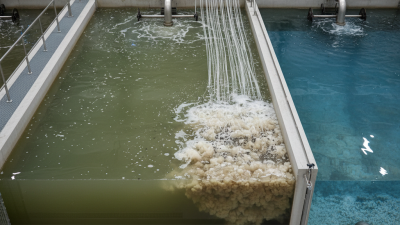
Polymer flocculants play a crucial role in various industries, including wastewater treatment, mining, and food processing. These synthetic polymers aid in the coagulation and agglomeration of particles, enhancing the separation and removal of solids from liquids. Understanding how these flocculants work is essential for choosing the right type for your specific needs. Each type of polymer has unique properties, such as charge density and molecular weight, which can affect performance.
When applying polymer flocculants, it's vital to evaluate your specific application requirements. Different industries demand varying levels of purity and effectiveness. Experimenting is often necessary. You may need to test several options before finding the perfect match. Factors such as temperature, pH, and concentration can influence the efficacy of the flocculants. Keeping detailed records can help identify the conditions under which a particular polymer performs best.
It's also important to be aware that not every polymer flocculant is universally applicable. Some may work exceptionally well in one context but fail in another. Your experience will guide you in understanding these nuances. Engaging with experts in the field can provide insights into the best practices for polymer flocculation. Continuous learning is essential, as new formulations and applications emerge regularly.
Identifying Your Water Treatment Needs and Goals
When identifying your water treatment needs, consider the specific contaminants present. Different flocculants target various particles. For example, some are effective against turbidity, while others can remove dissolved solids. Knowing the types of impurities in your water guides your selection. A water test can reveal these details.
Establish clear goals for your treatment process. Are you aiming for compliance with regulations, improving aesthetic quality, or enhancing process efficiency? These objectives affect your choice of polymer flocculants. If your primary focus is on clarity, you might opt for a different product than if you're addressing chemical balance.
Experience often informs decisions. However, it's essential to remain open to new insights. The market for flocculants is evolving. Keep an eye on research and case studies that outline successful applications. Some solutions may have limitations or require adjustments in dosage. Learning from both successes and challenges is vital for optimizing your approach. Reflect on past choices and be ready to adapt.
How to Choose the Best Polymer Flocculant for Your Needs?
| Flocculant Type |
Molecular Weight (Daltons) |
Charge Type |
Application Area |
Dosage (ppm) |
| Anionic |
5,000,000 |
Negative |
Wastewater Treatment |
10-50 |
| Cationic |
3,000,000 |
Positive |
Paper and Pulp |
5-25 |
| Nonionic |
8,000,000 |
Neutral |
Mining Applications |
20-100 |
| Amphoteric |
6,000,000 |
Both |
Textile Industry |
15-60 |
Evaluating Flocculant Types and Their Characteristics
Choosing the right polymer flocculant is crucial for effective water treatment. Flocculants fall into several categories, each with unique characteristics.
Anionic flocculants work well in high pH environments. Cationic flocculants can be effective for neutral to low pH conditions. Non-ionic flocculants offer versatility, bridging various suspended particles. Understanding these properties helps enhance treatment efficiency.
Data from industry reports indicates that anionic flocculants account for approximately 45% of the market share. Cationic flocculants serve 30%, while non-ionic options cover the remaining 25%. These figures highlight the need for tailored solutions. Selecting a flocculant involves assessing water chemistry and specific treatment requirements.
Tip: Always conduct jar tests to evaluate flocculant performance before full-scale application. This process helps fine-tune the dosage and type. Be aware that factors like temperature and particle size influence flocculation.
Choosing the wrong flocculant can lead to inadequate treatment results. Monitor the sludge volume and settleability closely. Adjustments may be needed based on observed performance. Regular evaluation saves time and costs in the long run. Understanding the intricacies of flocculant types ensures a more efficient treatment process.
Assessing Compatibility with Existing Processes and Chemicals
Choosing the right polymer flocculant is crucial.
Compatibility with existing processes and chemicals greatly impacts effectiveness.
Different industries utilize various chemical formulations.
Therefore, a thorough assessment of your current process is essential.
Consider the pH levels and ionic strength of your solution.
Some flocculants perform better in specific pH ranges.
For instance, a recent study found that polyacrylamides excel between pH 6 and 8.
Evaluate any other chemicals present in your system.
Interactions might weaken the flocculation process.
Reports suggest that certain biopolymers can enhance flocculation when combined with traditional flocculants.
Here’s a tip: Conduct small-scale jar tests.
This allows you to observe the interaction of your flocculant with existing materials.
Also, consider environmental factors.
Some flocculants are more biodegradable, which may benefit your system.
Investing time in compatibility testing pays off.
Poor choices can lead to unsatisfactory results and wasted resources.
Consider seeking professional advice when needed.
Having experts analyze your situation can provide invaluable insights.
Data from industry reports indicate that optimizing flocculant use can improve efficiency by up to 30%.
Testing and Monitoring Flocculant Performance Effectively
When selecting a polymer flocculant, testing its performance is crucial. Effective monitoring can save time and resources, ensuring optimal efficiency. Industry reports indicate that improper flocculant selection leads to a poor sedimentation rate, sometimes exceeding 20%. Adjusting dosages based on real-time data can minimize these issues.
To accurately measure performance, consider the turbidity values before and after flocculation processes. Turbidity reduction rates are a reliable indicator of effectiveness. Reports suggest that achieving a reduction greater than 90% is ideal in many applications. Conducting jar tests can provide insights into how different flocculants interact with specific suspensions. This method is practical and often reveals surprising results that may require reevaluation of initial choices.
Another key aspect is regular performance checks. An unexpected change in wastewater characteristics can affect flocculant efficiency. Monitoring parameters like pH, temperature, and solids concentration provides comprehensive insights. Data shows that up to 15% of systems experience fluctuations that traditional tests fail to catch. A proactive approach allows for adjustments before any real issues arise. Effective testing and monitoring lead to more informed decisions, improving overall flocculation processes.
Performance Comparison of Different Polymer Flocculants