
2026 How to Use Additive Bentonite for Effective Applications?
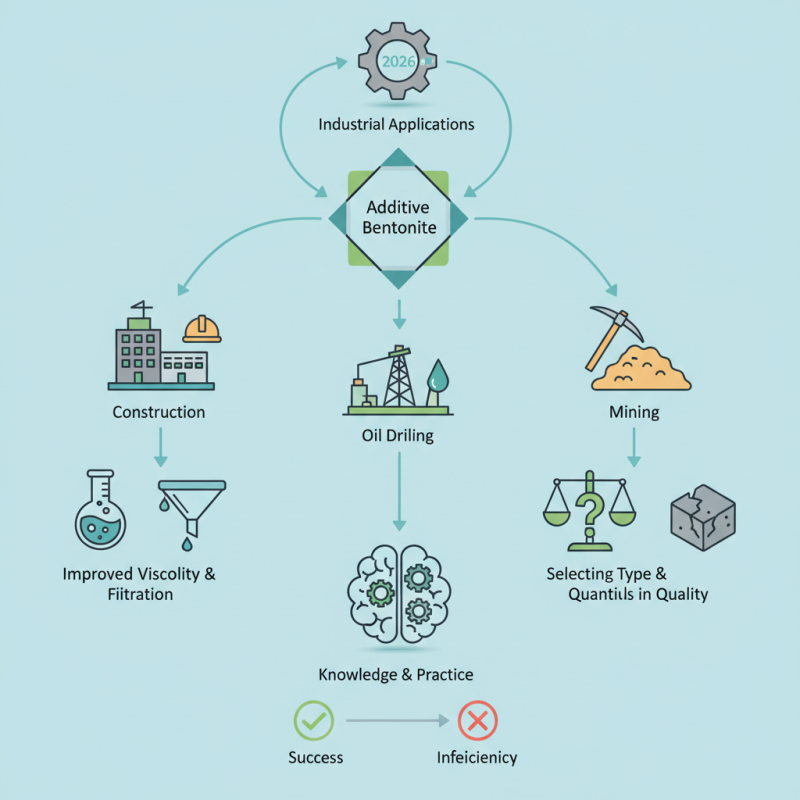
In the world of industrial applications, Additive Bentonite plays a crucial role. This unique clay mineral enhances various processes. Its versatility allows it to be used in different sectors, including construction, oil drilling, and mining.
Additive Bentonite offers benefits like improved viscosity and filtration. However, its effectiveness depends on proper application methods. Users often face challenges in selecting the right type and quantity. The variations in bentonite quality can lead to unexpected results.
Experimenting with Additive Bentonite requires careful consideration. Not all additives yield the same outcomes. Understanding the specific needs of your project is essential. Missteps can result in inefficiency. Therefore, knowledge and practice become vital for success in utilizing Additive Bentonite effectively.
Understanding Additive Bentonite: Definition and Characteristics
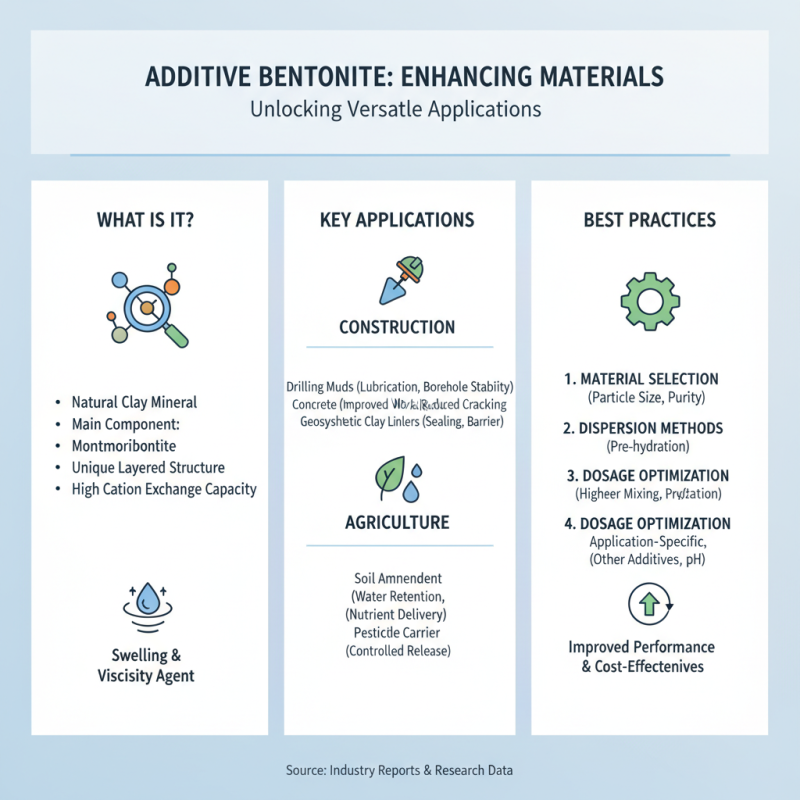
Additive bentonite is a natural clay material known for its unique properties. It is primarily composed of montmorillonite, which gives it excellent swelling and absorption capabilities. This clay is widely used in various industries due to its ability to enhance performance, particularly in drilling muds and construction applications. Its fine particle size allows it to easily mix with other materials, enabling improved texture and consistency.
Understanding the characteristics of additive bentonite is crucial for effective use. This clay can retain water, making it effective in sealing and stabilizing. Its high plasticity allows it to shift under pressure without breaking, providing resilience in construction scenarios. However, the quality of bentonite can vary depending on the source. Some batches may contain impurities or inconsistencies that affect their performance.
Working with additive bentonite can require a bit of trial and error. When using it for specific applications, not every type will yield the desired results. Experimentation may reveal unexpected challenges, such as insufficient bonding or excessive swelling. It’s important to carefully analyze each batch to determine its suitability. Testing small quantities can provide insights before large-scale applications.
2026 How to Use Additive Bentonite for Effective Applications
| Application | Bentonite Type | Recommended Dosage (lbs/ton) | Benefits |
|---|---|---|---|
| Animal Feed | Sodium Bentonite | 5-10 | Improves digestion and nutrient absorption |
| Foundry Industry | Calcium Bentonite | 4-6 | Enhances mold strength and reduces defects |
| Pet Litter | Sodium Bentonite | 10-15 | Excellent clumping and odor control |
| Civil Engineering | Activated Bentonite | 8-12 | Improves soil stabilization and waterproofing |
| Cosmetics | Montmorillonite | 1-3 | Enhances texture and provides absorbent properties |

Related Posts
-

Discover the Benefits of Racer Back Singlets for Athletes and Fitness Enthusiasts
-
How to Choose the Right Natural Flocculant for Water Treatment?
-
Top 10 Natural Flocculants You Should Know About?
-

Top 10 UV Gel Nail Polish Brands for Stunning Manicures in 2023
-
Unlocking the Power of Organic Flocculants for Enhanced Wastewater Treatment Efficiency
-

Top 10 Benefits of Using Pac Drinking Water for Your Health?
-

Phone
-

E-mail
-

Whatsapp
-

WeChat
Jessy Lin
Paul Zhou:8613356391894
Eric Wong:8615963245439
Emily Wu:8617866856171 -
WeChat
Paul Zhou

-
WeChat
Eric Wong

-
WeChat
Emily Wu